
Wing Chun History and Family Tree
Article by Dan Knight added on 11 Jul 2012. Last updated on 18 Oct 2012.
How Wing Chun Originated from China
The History of the Chinese martial art Wing Chun is outlined below. This account of the origin of Wing Chun Kung Fu was written by the late Grandmaster Ip Man (often called Yip Man).
Translation of the late Ip Man's account
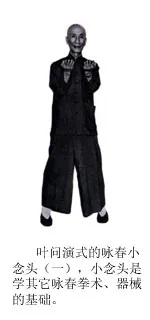
The founder of the Wing Chun Kung Fu System, Miss Yim Wing Chun was a native of Canton [Kwangtung Province] in China. She was an intelligent and athletic young girl, upstanding and forthright. Her mother died soon after her betrothal to Leung Bok Chau, a salt merchant of Fukien. Her father, Yim Yee, was wrongfully accused of a crime and, rather than risk jail, they slipped away and finally settled down at the foot of Tai Leung Mountain near the border between Yunan and Szechuan provinces. There they earned a living by running a shop that sold bean curd.
During the reign of Emperor K'anghsi of the Ching Dynasty (1662-1722) Kung Fu became very strong in the Siu Lam [Shaolin] Monastery of Mt. Sung, in Honan Province. This aroused the fear of the Manchu government [a non-Chinese people from Manchuria in the North, who ruled China at that time], which sent troops to attack the Monastery. Although they were unsuccessful, a man named Chan Man Wai, a recently appointed civil servant seeking favor with the government, suggested a plan.
He plotted with Siu Lam monk Ma Ning Yee and others who were persuaded to betray their companions by setting fire to the monastery while soldiers attacked it from the outside. Siu Lam was burned down, and the monks and disciples scattered. Buddhist Abbess Ng Mui, Abbot Chi Shin, Abbot Pak Mei, Master Fung To Tak and Master Miu Hin escaped and went their separate ways.
Ng Mui took refuge in the White Crane Temple on Mt. Tai Leung [also known as Mt. Chai Har]. It was there she met Yim Yee and his daughter Wing Chun from whom she often bought bean curd on her way home from the market. At fifteen, with her hair bound up in the custom of those days to show she was of an age to marry, Wing Chun's beauty attracted the attention of a local bully. He tried to force Wing Chun to marry him, and his continuous threats became a source of worry to her and her father. Ng Mui learned of this and took pity on Wing Chun. She agreed to teach Wing Chun fighting techniques so she could protect herself. Wing Chun followed Ng Mui into the mountains, and began to learn Kung Fu. She trained night and day, until she mastered the techniques. Then she challenged the bully to a fight and beat him.
Ng Mui later traveled around the country, but before she left she told Wing Chun to strictly honor the Kung Fu traditions, to develop her Kung Fu after her marriage, and to help the people working to overthrow the Manchu government and restore the Ming Dynasty.
After her marriage Wing Chun taught Kung Fu to her husband Leung Bok Chau. He in turn passed these techniques on to Leung Lan Kwai. Leung Lan Kwai then passed them on to Wong Wah Bo. Wong Wah Bo was a member of an opera troupe on board a junk, known to Chinese as the Red Junk. Wong worked on the Red Junk with Leung Yee Tei. It so happened that Abbot Chi Shin, who fled from Siu Lam, had disguised himself as a cook and was then working on the Red Junk. Chi Shin taught the Six-and-a-half-point Long Pole techniques to Leung Yee Tei. Wong Wah Bo was close to Leung Yee Tei, and they shared what they knew about Kung Fu. Together they shared and improved their techniques, and thus the Six-and-a-half-point Long Pole was incorporated into Wing Chun Kung Fu. Leung Yee Tei passed his Kung Fu on to Leung Jan, a well known herbal Doctor in Fat Shan. Leung Jan grasped the innermost secrets of Wing Chun, attaining the highest level of proficiency. Many Kung Fu masters came to challenge him, but all were defeated. Leung Jan became very famous. Later he passed his Kung Fu on to Chan Wah Shan, who took me and my elder Kung Fu brothers, such as Ng Siu Lo, Ng Chung So, Chan Yu Min and Lui Yu Jai, as his students many decades ago.
It can thus be said that the Wing Chun System was passed on to us in a direct line of succession from its origin. I write this history of the Wing Chun System in respectful memory of my forerunners. I am eternally grateful to them for passing to me the skills I now possess. A man should always think of the source of the water as he drinks it; it is this shared feeling that keeps our Kung Fu brothers together.
Is this not the way to promote Kung Fu, and to project the image of our country?
- Ip Man
Wing Chun Family Tree
How our Wing Chun was passed down to the instructors in the Sam Kwok Martial arts Association. Our Martial Art Linage:
Select a name to read more about them and that stage of Wing Chun's development. Some of the descriptions are taken from Ip Man's account of the history of Wing Chun as it was passed to him by word of mouth. Ip Man's account is the oldest written history of Wing Chun, however the factual accuracy of the older parts is a subject of debate in the Wing Chun community.
-
Ng Mui
During the reign of Emperor K'anghsi of the Ching Dynasty (1662-1722) Kung Fu became very strong in the Siu Lam [Shaolin] Monastery of Mt. Sung, in Honan Province. This aroused the fear of the Manchu government [a non-Chinese people from Manchuria in the North, who ruled China at that time], which sent troops to attack the Monastery. Although they were unsuccessful, a man named Chan Man Wai, a recently appointed civil servant seeking favour with the government, suggested a plan.
He plotted with Siu Lam monk Ma Ning Yee and others who were persuaded to betray their companions by setting fire to the monastery while soldiers attacked it from the outside. Siu Lam was burned down, and the monks and disciples scattered. Buddhist Abbess Ng Mui, Abbot Chi Shin, Abbot Pak Mei, Master Fung To Tak and Master Miu Hin escaped and went their separate ways.
Ng Mui took refuge in the White Crane Temple on Mt. Tai Leung [also known as Mt. Chai Har. It was there she met Yim Yee and his daughter Wing Chun from whom she often bought bean curd on her way home from the market.. -
Yim Wing Chun
The founder of the Wing Chun Kung Fu System, Miss Yim Wing Chun was a native of Canton [Kwangtung Province] in China. She was an intelligent and athletic young girl, upstanding and forthright. Her mother died soon after her betrothal to Leung Bok Chau, a salt merchant of Fukien. Her father, Yim Yee, was wrongfully accused of a crime and, rather than risk jail, they slipped away and finally settled down at the foot of Tai Leung Mountain near the border between Yunan and Szechuan provinces. There they earned a living by running a shop that sold bean curd.
At fifteen, with her hair bound up in the custom of those days to show she was of an age to marry, Wing Chun's beauty attracted the attention of a local bully. He tried to force Wing Chun to marry him, and his continuous threats became a source of worry to her and her father. Ng Mui learned of this and took pity on Wing Chun. She agreed to teach Wing Chun fighting techniques so she could protect herself. Wing Chun followed Ng Mui into the mountains, and began to learn Kung Fu. She trained night and day, until she mastered the techniques. Then she challenged the bully to a fight and beat him.
Ng Mui later travelled around the country, but before she left she told Wing Chun to strictly honour the Kung Fu traditions, to develop her Kung Fu after her marriage. -
Leung Bok Cho
After her marriage Wing Chun taught Kung Fu to her husband Leung Bok Chau. It was Leung Bok Chau who named the fighting style after his wife Wing Chun. Not much else is known about Leung Bok Chau except that he, in turn passed the techniques and fighting style on to Leung Lan Kwai.
-
Leung Lan Kwai
Leung Lan Kwai's past like much of Wing Chun's history is shrouded in mystery. Leung Lan Kwai is said to have come from southern China around Guangzhou or Foushan. Leung Lan Kwai is said to have joined the "Red Boat Opera" when he lived and performed. There he trained with other martial artists from china and passed on what he knew to Wong Wah Bo.
-
Wong Wah Bo
Wong Wah Bo worked on the "Red Junk Boat" with Leung Yee Tei. The legend goes that by chance Abbot Chi Shin, who fled from Siu Lam at the same Time as Ng Mui, had disguised himself as a cook and had also been working on the Red Junk. Chi Shin taught the Six-and-a-half-point Long Pole techniques to Leung Yee Tei.
Wong Wah Bo was close to Leung Yee Tei, and they shared what they knew about Kung Fu. Together they shared and improved their techniques, and thus the Six and a half point Long Pole form was incorporated into Wing Chun Kung Fu. Also Wong Wah Boh developed and added the Eight Cutting Knives (Bart Cham Dao) form to the system. -
Leung Yee Tei
Leung Yee Tei meet Wong Wah Bo on the "Red Junk Boat". The legend goes that by chance Abbot Chi Shin, who fled from Siu Lam at the same Time as Ng Mui, had disguised himself as a cook and had also been working on the Red Junk Boat. Chi Shin taught the martial arts including weapons form and fighting techniques to Leung Yee Tei.
When Leung Yee Tei meet Wong Wah Bo they became friends and they shared what they knew about Kung Fu. Together they shared and improved their techniques, and thus the six and a half point long pole form was incorporated into Wing Chun Kung Fu. Leung Yee Tei passed his Kung Fu on to Leung Jan, a well-known herbal Doctor in Fat Shan. -
Leung Jan
Leung Jan was a well-known herbal Doctor in Foushan. Leung Jan represents the point in Wing Chun’s history where things become fact and where the history was no longer passed from word of mouth. Leung Jan wrote 3 books about Chinese medicine which were passed to his son Leung Bik and later Ip Man. These books are on display in the Ip Man Tong Museum in Foushan. Some renowned figiures in the Wing Chun world like Sam Kwok also have copies.
It is said Leung Jan grasped the innermost secrets of Wing Chun, attaining the highest level of proficiency. Many Kung Fu masters came to challenge him, but all were defeated. Leung Jan became very famous. Later he passed his Kung Fu on to Chan Wah Shan and his Son Leung Bik. -
Leung Bik
Leung Bik learned Wing Chun from his father and later moved to Hong Kong where he practiced Chinese medicine. He did not teach anyone Wing Chun until he hear a story from a boy in his apartment block. The boy told Leung Bik that a police officer was beating a women and him and his class mate Ip Man saw it on the way to school. Ip Man confronted the officer who told him to mind his own business. The argument ended quickly and violently with Ip Man bloodying the nose of the office.
When the boy told Bik how Man had hit the office Bik was very interested and asked to be introduced to Ip Man.Chan Wa Shun
Leung Jan did not teach his Wing Chun openly. Chan Wa Shun was working as a money changer in in Foushan and enjoyed training martial arts. He wanted to learn from Leung Jan and he is said to have spied on Jan teaching his 2 sons Wing Chun. Although there are various accounts of how Wa Shun and Jan meet, after Jan found out Wa Shun had been spying on his training Chan Wa Shun hand begged Jan to teach him and Leung Jan had finally accepted.
Chan Wa Shun was a well-built individual and he won many fights in his time and was one of the first people to teach Wing Chun openly to the general public. -
Ip Man
When Ip Man was 13 years old he started learning Wing Chun from Chan Wah-shun. Because of his sifu's old age, Ip Man had to learn much of his skills and techniques from his master's second eldest disciple Ng Chung-sok. Three years into Ip Man’s training Chan Wah-shun died. One of his dying wishes was to have Ng continue training Ip.
At the age of 15 Ip man moved to Hong Kong. While at St. Stephen's Ip Man intervened after seeing a foreign police officer beating a woman. The story goes that the police officer tried to strike Ip Man who used his martial arts to strike the officer down, at which point Ip Man and his classmate ran to school. The classmate is said to have told an older man who lived in the same apartment block. Ip Man was invited to see this man and the man asked Ip Man what martial art he studied. Ip told him, but said he would not understand. The man then asked Ip Man to show him his first 2 forms (Sil Lim Tao and Chun Kiu). The man then told Ip Man that his forms were "not too great." Ip Man was then invited to Chi Sau (a form of training that involves controlled attack and defence). Ip Man saw this as an opportunity to prove his Kung Fu was good, but he was beaten after just a few strikes. It turned out that the old man was his master's SiBak (senior training partner), Leung Bik , son of his master's master Leung Jan . After that encounter, Ip Man continued his training lessons from Leung Bik. By the age of 24, Ip Man had returned to Foshan, his Wing Chun skills tremendously improved.
In Foshan, Ip Man became a policeman. He did not formally run a Wing Chun school, but taught several of his subordinates, his friends and relatives.
Later in Hong Kong, Ip Man opened a Wing Chun martial arts school.
In 1967, Ip Man and some of his students established the Hong Kong Ving Tsun Athletic Association. -
Ip Chun
Ip Chun was born in Foshan in 1924. Chun is the oldest son of Ip Man Ip Man. Ip Chun began studying Wing Chun with his father when he was seven years old. This training stopped when his farther moved to Hong Kong.
Ip Chun resumed his training when he himself moved to Hong Kong.
In Hong Kong Ip worked as an accountant and newspaper reporter in the day and practised Wing Chun in the evening under his father's tutelage. In accordance with his father's wishes, in 1965, Ip participated in the affairs of the Wing Chun Athletic Association (WCAA) and became one of its founding members when it was formally established in 1968. During the first three years in the association, Ip took on the role of treasurer and was later appointed as chairman.
Ip Chun has taught many students from around the world and still teaches in Hong Kong to this day.Ip Ching
Ip Ching was born in Foshan, China in 1936. Ching is the youngest son of Yip Man. From an early age Ip Ching started his training along with his brother Ip Chun, under his father Ip Man. However this was short lived as his father had to leave and travel to Hong Kong in search of a better life for his family. In 1962 Ip Ching and his older brother Ip Chun were reunited with their father in Hong Kong. They both resumed their training under Ip Man’s direct guidance. Ip Man taught from his home and today this is where Ip Ching resides in Kowloon in Hong Kong.
Ip Ching has taught many students from around the world and still teaches in Hong Kong to this day. -
Samuel Kwok
Sam Kwok was born in Hong Kong in 1948. His interest in the martial arts started at an early age, his first experience was in White Crane Kung Fu, under the guidance of his uncle Luk Chi Fu. His Wing Chun training first started in 1967 under Chan Wai Ling in Hong Kong.
In 1972 Samuel Kwok came to the UK to study psychiatric nursing and pursue a new life. Living in London then, he went to the Church of Reverend Kao, how told him about a Wing Chun teacher called Lee Sing, who started teaching Samuel Kwok in 1973.
In 1978 returning to Hong Kong in hope to find the true source of Wing Chun, Samuel Kwok was introduced to Ip Chun by Lee Sing, who at the time was joining the Ip Man Martial Arts Association. It was during a second meeting with Ip Chun that he offered to teach Samuel Kwok the Wooden Dummy techniques, realizing that he was being given a great honour he accepted. At this time, Ip Chun was only teaching part time.
For the next few years Samuel Kwok had private tuition from Ip Chun and after gaining Master level in Wing Chun, he opened his first school in Hong Kong and it was not long before his students began making a name for themselves at tournaments and demonstrations in the colony.
Having settled in the UK in 1981, Master Kwok started to teach Wing Chun privately but later he opened his first school after great demand from several martial arts enthusiasts.
In 1991 Master Kwok invited both Grandmasters Ip Chun and Ip Ching to the UK, to held their first joint seminars across the country. This was the first visit to the UK by Grandmaster Ip Ching.
In 1994 Master Kwok returned to Hong Kong to study with Grandmaster Ip Ching.
Sam Kwok still trains with both Ip Chun and Ip Ching in Hong Kong each year and works with other martial artists all around the world to keep developing Wing Chun.